
Analysis
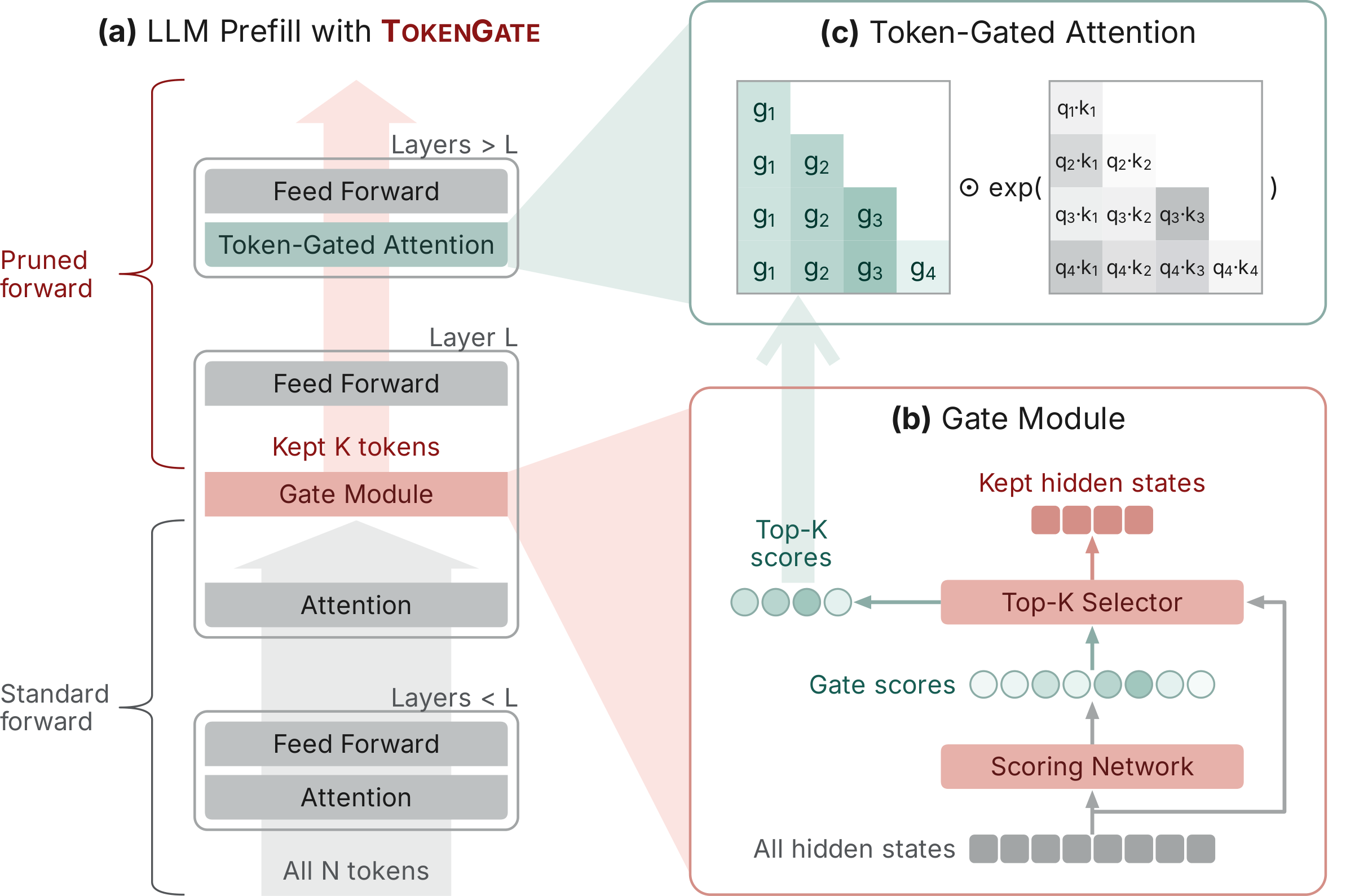
TokenGate adds a learned token-selection component to an existing language model. It aims to reduce the cost of prefill: the processing of input before the model starts producing an answer. The researchers released a paper and code for the approach.
The paper reports 1.4 to 11.3 times faster time to first token and 1.5 to 3.4 times lower peak prefill memory across its evaluated tasks. These are the authors’ results, with accuracy depending on the baseline and pruning setting. In the released RepoBench-P example, retaining 2,000 tokens scores below the adapted model without pruning, while remaining above the unmodified model. The method requires model adaptation; it is not a universal switch for every deployed assistant.
Our reading: input processing deserves its own performance budget. These results concern prefill and tested configurations, not a guaranteed speedup for an entire conversation. The paper dates to October 19 and entered today's selection through an October 25 clipping lead.
Source: TokenGate: Adapting LLMs for Fast and Memory-Efficient Prefill with Learned Token Pruning · 2026-10-19
Why it matters
Long inputs can delay the first useful answer even when generation itself is fast.