

Analysis
A manager asks an agent for this quarter’s sales. The answer looks tidy, but does “sales” mean booked revenue, cash received or something else? A semantic layer is meant to settle that question before the query runs.
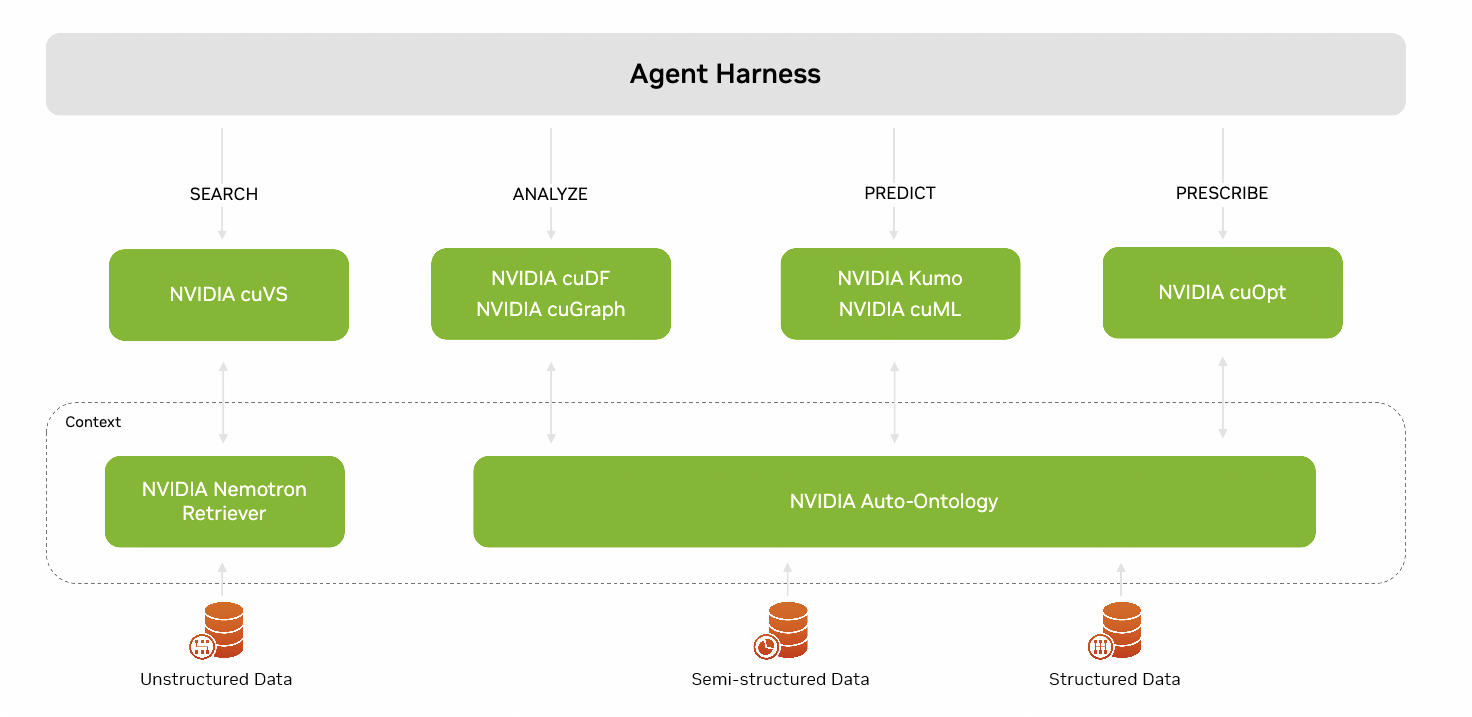
NVIDIA describes Auto Ontology as a Python framework for building graph-based reasoning layers over data. Its five stages move from discovering a starting ontology to grounding metrics and relationships, validating queries against certified definitions and lineage, exposing context through MCP, a CLI and an API, then feeding certified corrections back into the ontology.
That last step matters. NVIDIA’s own description casts the generated ontology as a starting point for business experts to test, refine and certify. In other words, the agent can get a map; someone still has to decide whether the map matches how the business counts things.
NVIDIA says its internal testing reduced ontology creation time by 90%, but the cited materials provide no methodology or independent reproduction. The repository publishes no text-to-SQL accuracy results either, so it doesn’t quantify whether the framework makes agent queries more reliable. It lists Databricks, Postgres, Snowflake and DuckDB as supported sources, and defaults inference to NVIDIA NIM endpoints with an NVIDIA API key.
For an operator, the useful question is not whether an agent can produce a plausible answer once. Ask who certifies the definition behind it, how corrections become durable, and whether the next query uses that corrected meaning. A convincing answer is a beginning; the business definition is the receipt.
Source: NVIDIA/auto-ontology (GitHub repository README) · 2026-11-02
Why it matters
A semantic layer can make an agent’s answers more useful only when the business definitions behind them are checked and kept current.